Key Takeaways

  • 75% of U.S. employers use automated applicant tracking systems to screen resumes before a human reviews them (Harvard Business School & Accenture, 2021)
  • The most common ATS failures are missing keywords, incompatible formatting, and incorrect file types
  • ResumeGeni scores your resume across 8 parsing layers — modeled on the same steps enterprise ATS platforms like Workday, Greenhouse, and Taleo use to evaluate candidates

How ATS Resume Scoring Works

Applicant tracking systems parse your resume into structured data — extracting your name, contact info, work history, skills, and education — then score how well that data matches the job requirements. Many ATS rejections happen because the parser couldn't extract critical fields, not because the candidate wasn't qualified.

LayerWhat It ChecksWhy It Matters
Document extractionFile format, encoding, readabilityCorrupted or image-only PDFs fail immediately
Layout analysisTables, columns, headers, footersMulti-column layouts break field extraction
Section detectionExperience, education, skills headingsNon-standard headings cause sections to be missed
Field mappingName, email, phone, dates, titlesMissing contact info is a common cause of immediate rejection
Keyword matchingJob-specific terms, skills, certificationsKeyword overlap affects recruiter search visibility and ATS scoring
Chronology checkDate ordering, gap detectionReverse-chronological order is expected by most ATS
QuantificationMetrics, numbers, measurable outcomesQuantified achievements help human reviewers and some scoring models
Confidence scoringOverall parse quality and completenessLow-confidence parses get deprioritized in results

Frequently Asked Questions

Is ResumeGeni free?
Yes. ResumeGeni is currently in beta — ATS analysis, scoring, and initial improvement suggestions are free with no signup required. Full guidance and saved reports may require a free account.
What file formats are supported?
PDF, DOCX, DOC, TXT, RTF, ODT, and Apple Pages. PDF and DOCX are recommended for best ATS compatibility.
How is the ATS score calculated?
Your resume is processed through an 8-layer parsing pipeline that extracts structured data the same way enterprise ATS platforms do. The score reflects how completely and accurately your resume can be parsed, plus how well your content matches common ATS ranking criteria.
Can ATS read PDF resumes?
Yes, but not all PDFs are equal. Text-based PDFs parse well. Image-only PDFs (scanned documents) and PDFs with complex tables or multi-column layouts often fail ATS parsing. Our analyzer will flag these issues.
How do I improve my ATS score?
Focus on three areas: use a clean single-column format, include keywords from the job description naturally in your experience bullets, and ensure all sections (contact, experience, education, skills) use standard headings.

ATS Guides & Resources

Built by engineers with 12 years of experience building enterprise hiring technology at ZipRecruiter. Last updated .

Career Sites

Radancy

Reimagine hiring with AI-optimized career sites.

Attract top talent by transforming your career site.

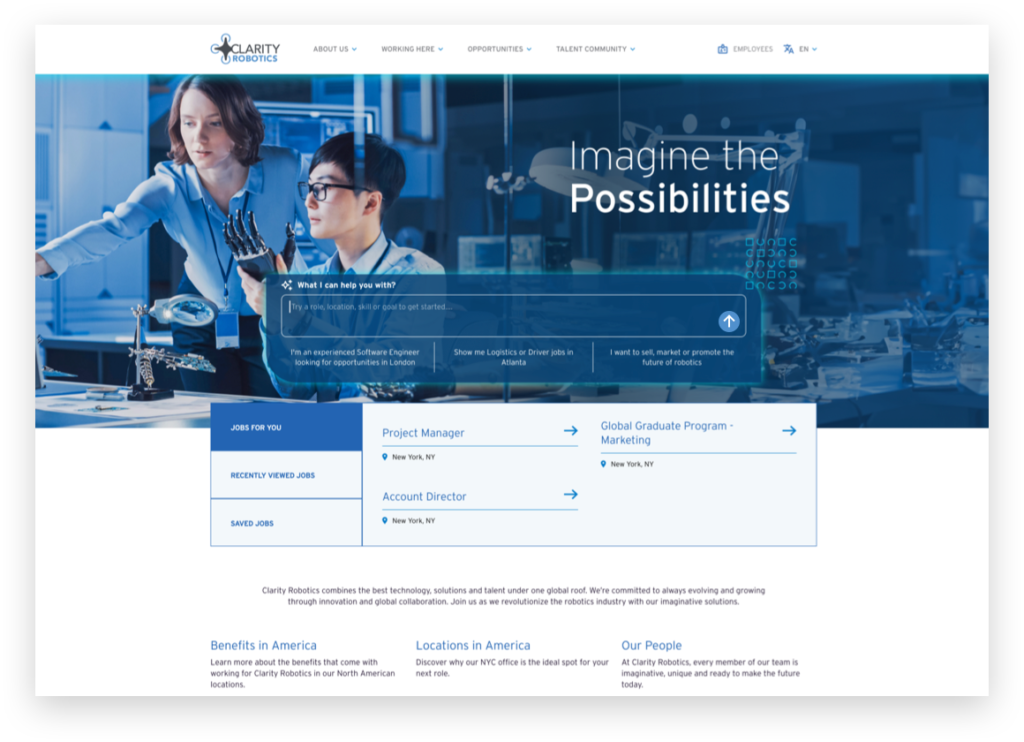
Your career website is more than just a job board – it’s a dynamic, AI-powered recruitment engine that attracts, engages and converts top talent. The Radancy Talent Acquisition Cloud simplifies the hiring process, accelerates results and builds the workforce of tomorrow. We deliver highly personalized, conversational candidate journeys, intelligent job distribution, intuitive job search tools and Agentic AI capabilities that optimize performance and engage with real-time context and intent.

Why choose Radancy’s Career Sites?
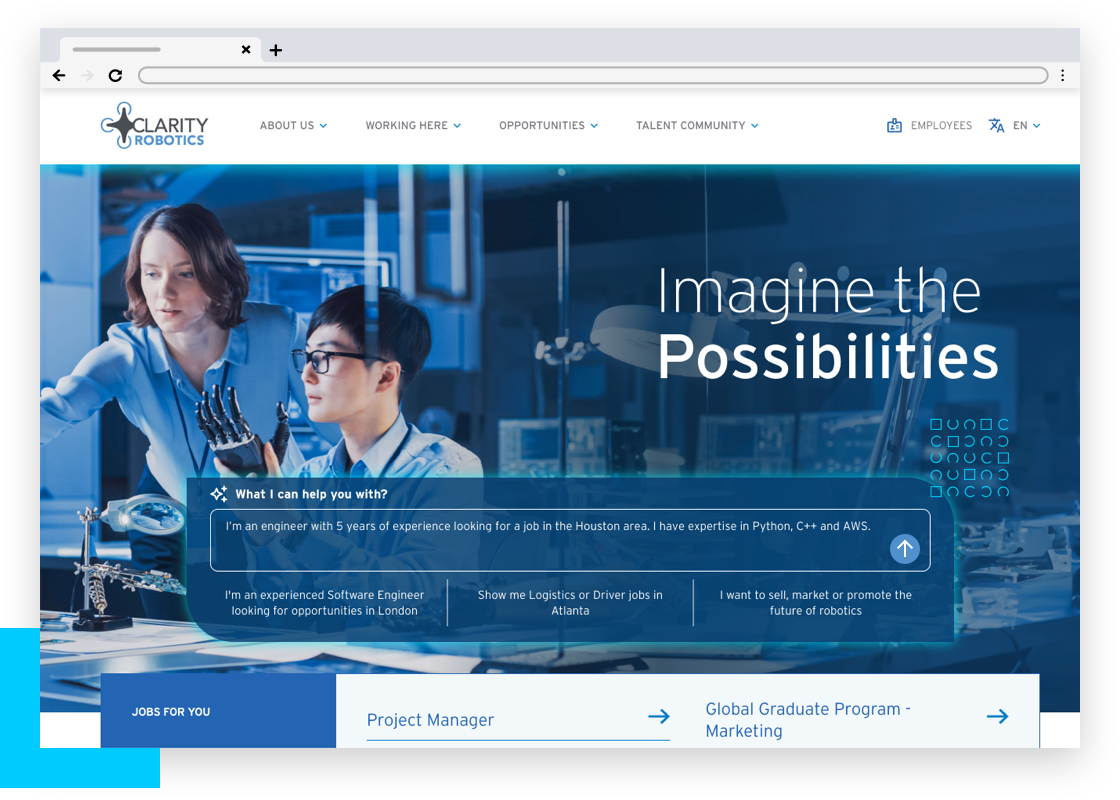
Radancy’s natural language search allows candidates to search and explore with conversational phrases like, “Show me hybrid engineering roles near me where I can use my Python skills.” AI search responses include relevant jobs and related content to help candidates discover opportunities and envision themselves in the role.

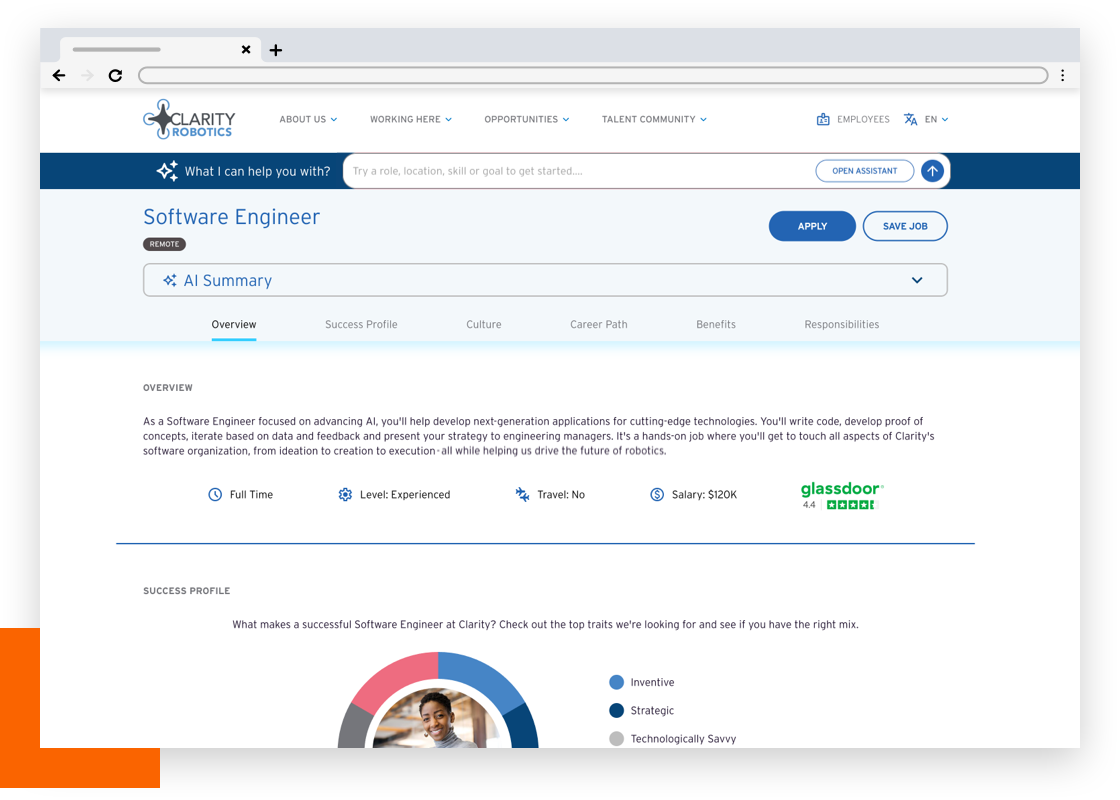
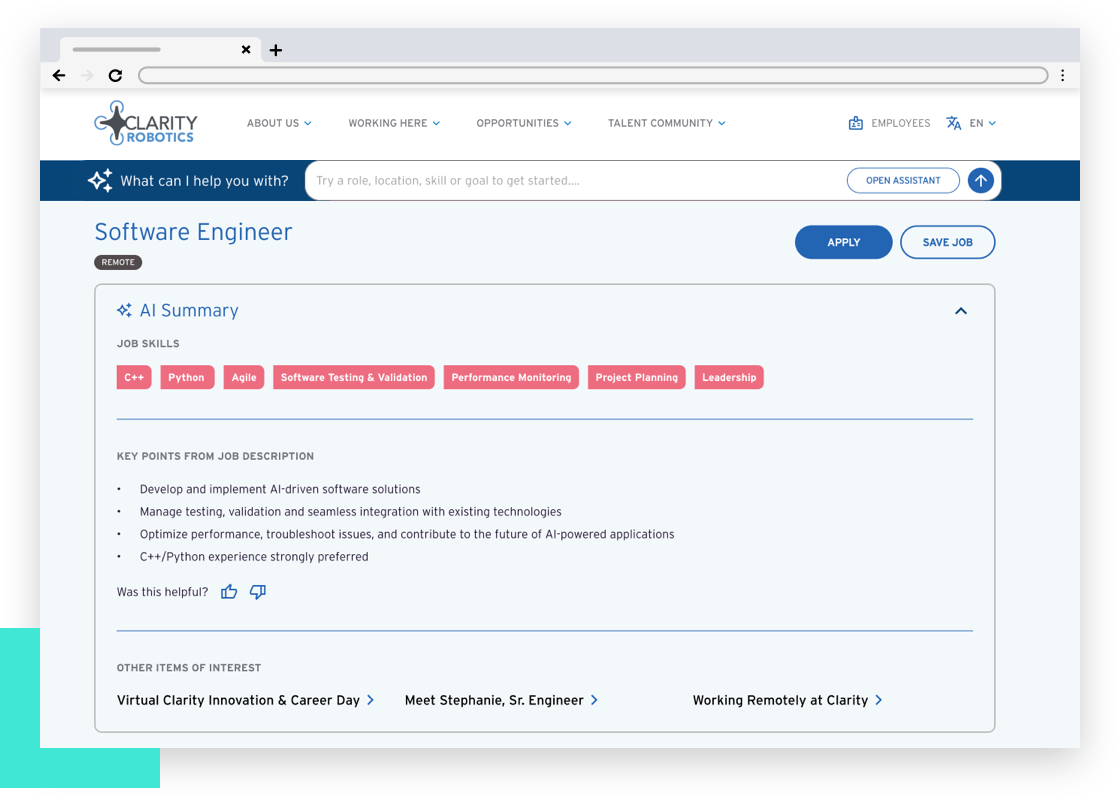
Radancy’s Advanced Job Descriptions enhance standard job listings by integrating ATS data with rich media elements, creating immersive job pages that:

  • Provide a complete picture of the role, company and culture.
  • Offer a personalized experience for high-volume and niche roles.
  • Strengthen employer branding by making job descriptions visually engaging.