Key Takeaways

  • 75% of U.S. employers use automated applicant tracking systems to screen resumes before a human reviews them (Harvard Business School & Accenture, 2021)
  • The most common ATS failures are missing keywords, incompatible formatting, and incorrect file types
  • ResumeGeni scores your resume across 8 parsing layers — modeled on the same steps enterprise ATS platforms like Workday, Greenhouse, and Taleo use to evaluate candidates

How ATS Resume Scoring Works

Applicant tracking systems parse your resume into structured data — extracting your name, contact info, work history, skills, and education — then score how well that data matches the job requirements. Many ATS rejections happen because the parser couldn't extract critical fields, not because the candidate wasn't qualified.

LayerWhat It ChecksWhy It Matters
Document extractionFile format, encoding, readabilityCorrupted or image-only PDFs fail immediately
Layout analysisTables, columns, headers, footersMulti-column layouts break field extraction
Section detectionExperience, education, skills headingsNon-standard headings cause sections to be missed
Field mappingName, email, phone, dates, titlesMissing contact info is a common cause of immediate rejection
Keyword matchingJob-specific terms, skills, certificationsKeyword overlap affects recruiter search visibility and ATS scoring
Chronology checkDate ordering, gap detectionReverse-chronological order is expected by most ATS
QuantificationMetrics, numbers, measurable outcomesQuantified achievements help human reviewers and some scoring models
Confidence scoringOverall parse quality and completenessLow-confidence parses get deprioritized in results

Frequently Asked Questions

Is ResumeGeni free?
Yes. ResumeGeni is currently in beta — ATS analysis, scoring, and initial improvement suggestions are free with no signup required. Full guidance and saved reports may require a free account.
What file formats are supported?
PDF, DOCX, DOC, TXT, RTF, ODT, and Apple Pages. PDF and DOCX are recommended for best ATS compatibility.
How is the ATS score calculated?
Your resume is processed through an 8-layer parsing pipeline that extracts structured data the same way enterprise ATS platforms do. The score reflects how completely and accurately your resume can be parsed, plus how well your content matches common ATS ranking criteria.
Can ATS read PDF resumes?
Yes, but not all PDFs are equal. Text-based PDFs parse well. Image-only PDFs (scanned documents) and PDFs with complex tables or multi-column layouts often fail ATS parsing. Our analyzer will flag these issues.
How do I improve my ATS score?
Focus on three areas: use a clean single-column format, include keywords from the job description naturally in your experience bullets, and ensure all sections (contact, experience, education, skills) use standard headings.

ATS Guides & Resources

Built by engineers with 12 years of experience building enterprise hiring technology at ZipRecruiter. Last updated .

DevOps Engineer

Bureau · Bangalore

About Bureau

Bureau is a unified risk decisioning platform for Compliance, Fraud, and Transaction risks. Our platform is a single decision-making engine, powered by a 1 billion+ identity knowledge graph. Over 150 Banks, fintechs, retailers, and digital platforms use Bureau to verify identities faster and stop fraud earlier globally.

Bureau has raised $50M+ from renowned Silicon Valley and global investors including Sorenson Capital and PayPal Ventures and is expanding rapidly from APAC to Americas, Europe, and beyond.

Why Bureau?

Bureau is building the infrastructure that makes digital identities and transactions safe and trustworthy for billions of people. The mission is big, the problems are complex, and the impact is real.

We hire people who want that level of responsibility. People who move fast, build systems from scratch, and care deeply about turning strategy into execution. If you want predictability or narrow scope, this won't be your place. If you want to shape how a scaling global company operates—keep reading.

About the Role - DevOps Engineer

As a DevOps Engineer, you will build and operate reliable, secure, and scalable cloud-native platforms. You will own CI/CD pipelines, Infrastructure as Code (IaC), and production operations for distributed systems that run across cloud and on-prem environments. A key focus for this role is data platform DevOps, meaning hands-on depth with Kafka, ClickHouse, Redis, and operating high-throughput, low-latency services with strong observability and incident discipline.

What you’ll be doing

  • Own and improve CI/CD for multiple services, enabling safe, fast, repeatable deployments across environments.

  • Build and operate Kubernetes-based platforms (cloud and on-prem), including cluster operations, upgrades, capacity planning, and reliability practices.

  • Implement and maintain Infrastructure as Code (Terraform-first) for cloud networking, compute, security, and platform services.

  • Drive automation across provisioning, deployments, scaling, failover, backups, and operational workflows.

  • Design production-grade patterns for high availability, performance, security, and scalability, including load balancing, autoscaling, and resilience.

  • Partner closely with Engineering, Security, and Product to streamline the full delivery lifecycle and reduce operational friction.

  • Prototype solutions and run PoCs for emerging tools, platform improvements, and operational accelerators.

  • Troubleshoot complex production issues using deep understanding of service topology, dependencies, and failure modes. Define mitigation strategies and communicate clearly.

  • Participate in on-call and incident response. Drive a culture of post-mortems, root cause analysis, and preventive engineering.

  • Support customer deployments where needed, including on-prem and regulated enterprise environments, ensuring repeatable and auditable delivery.

What You’ll Bring

  • 3 to 5 years of hands-on experience in a DevOps, SRE, or Platform Engineering role.

  • Strong Kubernetes experience including cluster operations and production troubleshooting.

  • Cloud experience on one or more of AWS, Azure, GCP, OCI, with an ability to adapt across clouds.

  • Strong IaC skills, especially Terraform, plus clear module and environment design practices.

  • Strong Linux fundamentals and proven experience debugging production environments.

  • Strong scripting in at least one of: Shell, Python, Go, Ruby.

  • CI/CD experience with GitHub Actions (or equivalent) and CD tooling like ArgoCD (or equivalent GitOps model).

  • Strong experience with observability stacks: logging, metrics, tracing (ELK, Prometheus, Grafana, OpenTelemetry, etc.).

  • Strong fundamentals in AWS networking concepts (VPCs, subnets, routing, NAT, security groups, NACLs, private connectivity, DNS).

  • Excellent communication and problem-solving skills, comfortable operating in a fast-paced environment.

  • Must-have: Data Platform DevOps Experience

  • You should have meaningful hands-on experience operating at least 2 of the following in production:

    • Kafka (clusters, topic design considerations, throughput, lag, partitions, retention, broker health, client tuning)

    • ClickHouse (ingestion patterns, merges, partitions, schema and performance tuning basics, storage planning)

    • Redis (clustering, persistence modes, memory sizing, latency, failover behaviour)
      Bonus if you have managed these alongside high-scale application workloads on Kubernetes.

Our Culture

  • We hire self-motivated people and get out of their way

  • We value performance, not hours worked

  • Speed, ownership, and impact matter most

Compensation

  • Competitive salary + potential equity

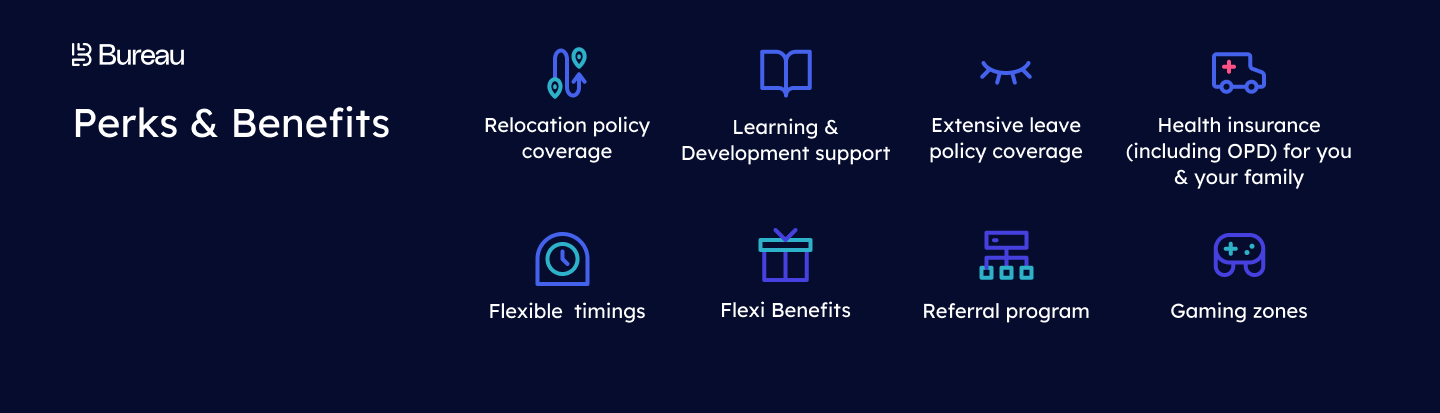
  • Health benefits, flexible PTO, learning budget